
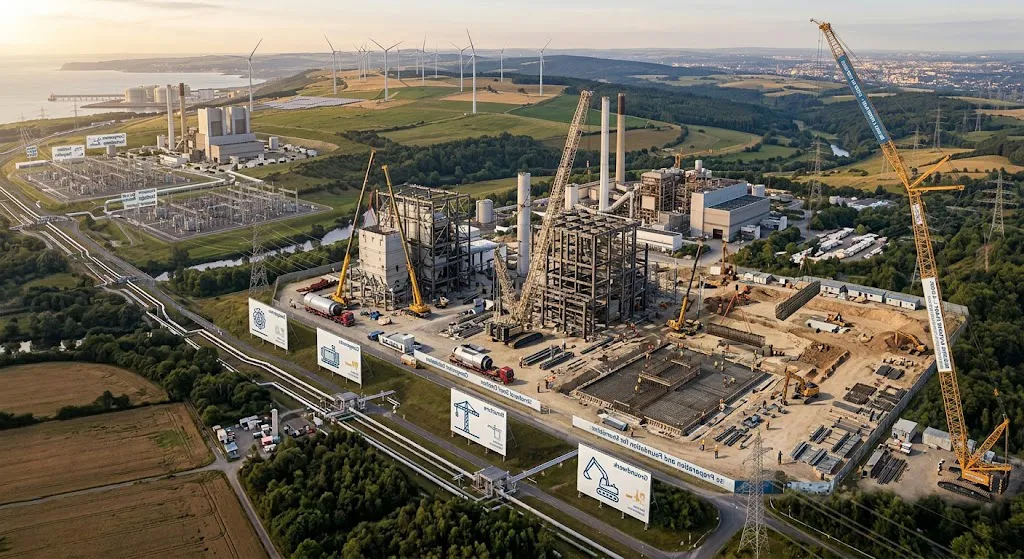
What a power plant is and how it works
A power plant is an industrial facility that converts energy from natural resources into electricity. Depending on the type, it may use fossil fuels, nuclear reactions, or renewable sources like wind and solar.
Most power plants follow a similar principle: energy is used to generate mechanical motion, which drives a turbine connected to a generator. The generator then converts this motion into electricity that is transmitted to the grid.
Feasibility studies and project planning
Before construction begins, a detailed feasibility study is conducted to evaluate the project’s viability.
Key elements include:
- Site selection and environmental analysis
- Fuel availability and logistics
- Grid connection and transmission access
- Financial modeling and ROI projections
- Regulatory approvals and permits
This phase determines whether the project is technically, financially, and legally feasible.
Engineering and design phase
Once approved, the project moves into detailed engineering and design.
This phase includes:
- Plant layout and system architecture
- Equipment selection (turbines, boilers, generators)
- Safety and compliance design
- Integration with grid infrastructure
Engineering accuracy is critical, as it directly impacts efficiency, cost, and long-term performance.
Construction and equipment installation
This is the most resource-intensive phase of the project.
Main activities:
- Civil construction (foundations, structures)
- Mechanical installation (turbines, piping systems)
- Electrical systems (transformers, control systems)
- Instrumentation and automation setup
EPC contractors usually manage this phase to ensure coordination between all stakeholders.
Testing and operation
After construction, the plant undergoes testing and commissioning.
Steps include:
- System testing and performance validation
- Safety inspections
- Grid synchronization
- Trial operations
Once all tests are passed, the plant becomes fully operational and starts generating electricity for commercial use.
Best power plant construction companies
Top companies in this field are known for delivering complex projects on time and within budget.
They typically offer:
- Full EPC capabilities
- Advanced engineering expertise
- Strong project management systems
- Experience in large-scale energy projects
Choosing the right contractor directly impacts project success.
International power plant contractors
International contractors play a key role in large energy projects, especially in developing markets.
They bring:
- Global experience in different environments
- Access to advanced technologies
- Strong supply chain networks
- Ability to handle multi-billion dollar projects
These companies often lead or partner in major infrastructure developments worldwide.
Power plant projects under Dr Roshandel management
Power plant projects managed under Dr Roshandel focus on precision execution and long-term performance.
Core approach:
- Structured project planning
- Tight control over timelines and costs
- Integration of international standards
- Focus on efficiency and scalability
This management style is designed to reduce risks and improve project outcomes.
FAQ
How long does it take to build a power plant?
Typically between 2 to 5 years, depending on the type and scale of the project.
How much does a power plant cost?
Costs vary widely, ranging from hundreds of millions to several billion dollars based on technology and capacity.
What companies build power plants?
Specialized EPC contractors and energy companies with engineering, procurement, and construction capabilities.
About Syntelli
In power plant development, Syntelli focuses on managing projects from early planning to final operation. The company emphasizes structured execution across feasibility, engineering, and construction phases. By aligning technical design with financial and operational goals, Syntelli supports the delivery of efficient, reliable, and scalable power generation facilities in different markets.