
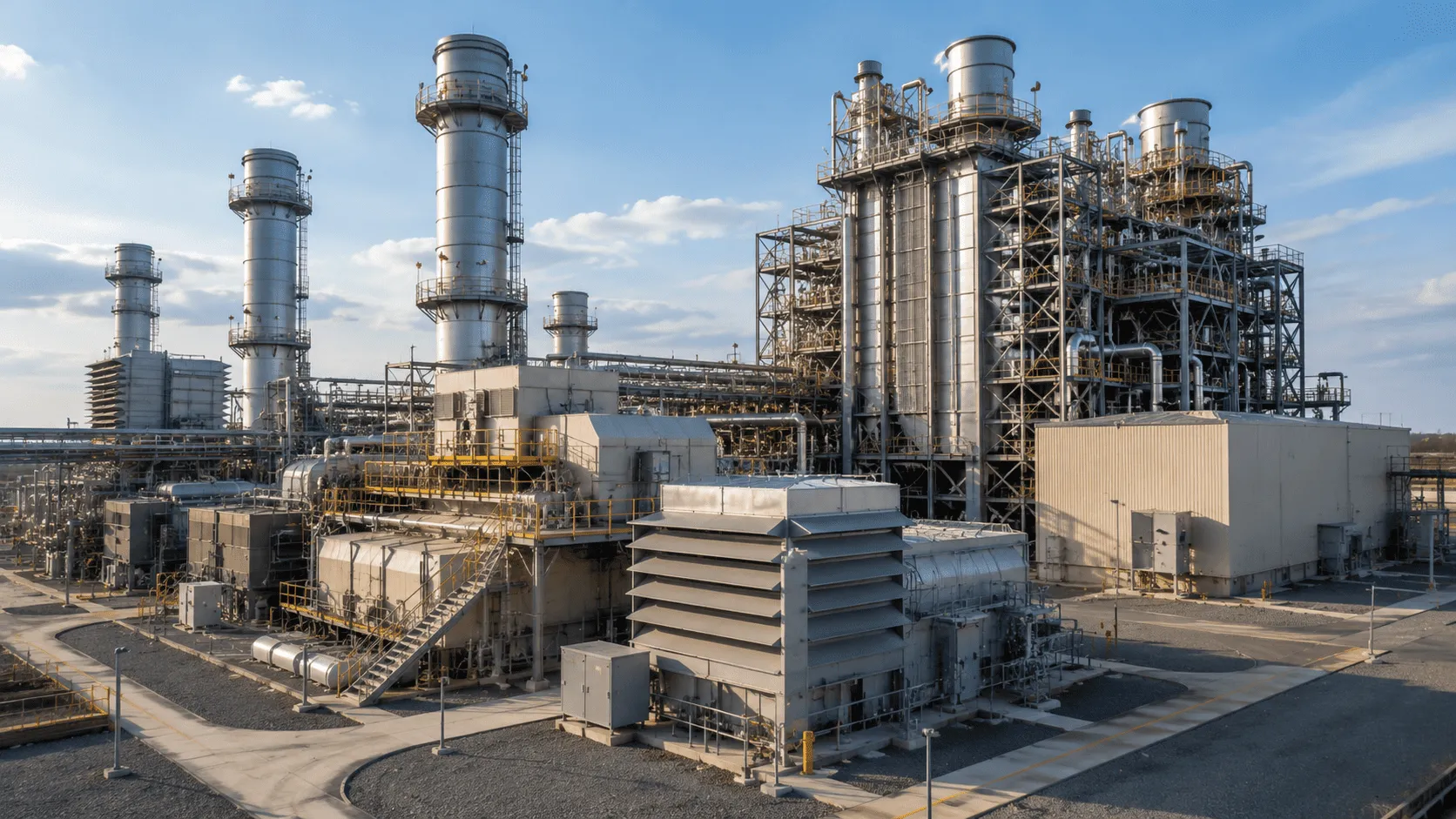
The performance of a power plant depends on a combination of specialized equipment working together to generate, manage, and deliver energy. Efficiency, reliability, and operational stability are heavily influenced by the quality of these components and how effectively they are integrated.
Understanding the main equipment used in power plants is important for project managers, plant operators, and energy investors, as equipment selection can directly impact long-term project performance.
Gas Turbines: A Core Component of Modern Power Generation
Gas turbines are among the most important pieces of equipment in modern power plants. They generate mechanical energy through the combustion of fuel, which is then transferred to a generator to produce electricity.
Key advantages of gas turbines include:
- Fast start-up capability
- High operational flexibility
- Suitable performance for large-scale projects
- Compatibility with combined cycle power plants
Because of these benefits, gas turbines are widely used across the power generation industry.
The Role of Steam Turbines in Power Plants
Steam turbines convert steam energy into mechanical energy and play a critical role in many thermal and combined cycle power plants.
By utilizing steam generated within the system, steam turbines help recover additional energy that would otherwise be wasted, improving the overall efficiency of the power plant.
Boilers and HRSG Systems
Boilers are essential components in many power generation facilities because they produce the steam required for electricity generation. In combined cycle plants, Heat Recovery Steam Generators (HRSGs) are commonly used to capture waste heat and convert it into useful steam.
Their primary functions include:
- Producing steam for steam turbines
- Recovering available thermal energy
- Improving plant efficiency
- Reducing energy losses
The performance of this equipment has a direct impact on overall plant efficiency.
How Generators Produce Electricity
Generators convert the mechanical energy supplied by turbines into electrical energy. Without generators, electricity production would not be possible.
Power plant generators must be capable of:
- Delivering the required electrical output
- Maintaining stable operation
- Performing reliably under varying operating conditions
For this reason, generator selection is a key part of power plant design and engineering.
Control and Monitoring Systems
Modern power plants generate and process large amounts of operational data. Managing this information effectively requires advanced automation, control, and monitoring systems.
These systems are responsible for:
- Monitoring equipment performance
- Controlling operational parameters
- Detecting faults and abnormalities
- Enhancing plant safety
Today, control systems are considered an essential part of every modern power generation facility.
Electrical Equipment and Power Distribution
Generating electricity is only part of the process. Power must also be transmitted and distributed safely and efficiently.
Key electrical systems typically include:
- Transformers
- Switchgear
- Protection systems
- Distribution and transmission equipment
These components play a critical role in maintaining grid stability and protecting major plant assets.
Why Equipment Selection Matters
The cost of purchasing equipment is only one aspect of a power plant project. Efficiency, reliability, maintenance requirements, and lifecycle performance are equally important considerations.
Key factors typically evaluated during equipment selection include:
- Project capacity requirements
- Expected efficiency levels
- Environmental conditions
- Operating costs
- Maintenance requirements
- Future expansion needs
Making the right equipment choices can reduce operational risk and improve long-term plant performance.
System Integration as a Key Success Factor
Even the most advanced equipment cannot deliver optimal results without proper integration. The success of a power plant depends on how effectively turbines, boilers, generators, control systems, and electrical equipment operate together.
When these systems are properly coordinated, the power plant can achieve higher efficiency, lower operating costs, and greater reliability throughout its lifecycle.
Frequently Asked Questions
What are the main components of a power plant?
Gas turbines, steam turbines, boilers, generators, control systems, and electrical equipment are among the most important power plant components.
What is the role of a generator?
A generator converts mechanical energy produced by a turbine into electrical energy.
What is an HRSG?
A Heat Recovery Steam Generator (HRSG) captures waste heat and uses it to produce steam for additional power generation.
Why are control systems important in power plants?
They help monitor operations, control equipment performance, improve safety, and support efficient plant management.
How does equipment selection affect power plant performance?
Equipment selection directly influences efficiency, operating costs, reliability, maintenance requirements, and long-term performance.