
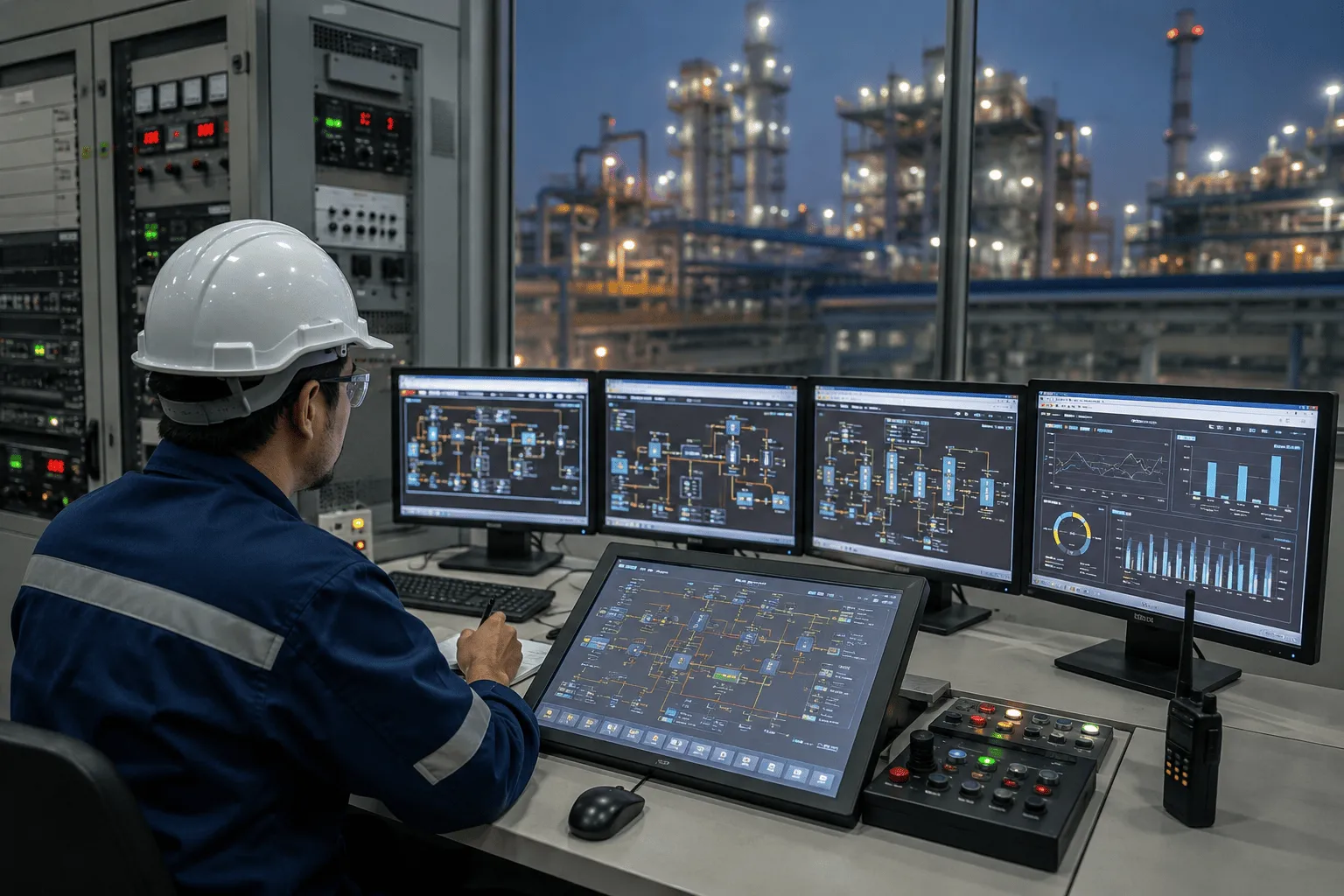
Industrial automation has become a fundamental part of modern power plant operations. As power generation systems become more complex, manual control alone is no longer sufficient to ensure reliable and efficient performance. For this reason, automation technologies play a critical role in managing processes, improving operational efficiency, and maintaining system stability.
In today’s power plants, automation helps operators achieve higher productivity, reduce human error, and enhance overall plant safety.
Why Is Automation Important in Power Plants?
Power plants consist of numerous interconnected systems that must operate in a coordinated and highly controlled manner. Even minor operational deviations can affect performance, reliability, and energy output.
Industrial automation helps power plants:
- Monitor equipment in real time
- Reduce human error
- Improve operational efficiency
- Enhance equipment and personnel safety
- Support faster decision-making
These benefits become even more valuable in large-scale power generation facilities.
The Role of Controllers in Power Plant Operations
Controllers are often considered the core of an automation system. They receive data from field devices, process information, and send commands to equipment based on predefined operating logic.
Key functions of controllers include:
- Processing operational data
- Regulating equipment performance
- Managing power generation processes
- Responding to abnormal operating conditions
By continuously controlling plant operations, controllers help maintain stable and predictable performance.
How Sensors Improve Power Plant Performance
Sensors provide the real-time data required for effective monitoring and control. Without accurate measurement and feedback, automation systems cannot make informed decisions.
Common parameters monitored by sensors include:
- Temperature
- Pressure
- Rotational speed
- Current and voltage
- Equipment vibration
This information is transmitted to control systems, allowing operators and automation platforms to evaluate plant conditions continuously.
The Role of HMI in Plant Management
HMI (Human Machine Interface) serves as the communication layer between plant operators and automation systems. It provides a visual representation of operational data and allows users to interact with equipment and control processes.
Typical HMI functions include:
- Displaying real-time equipment status
- Providing alarms and fault notifications
- Supporting manual control when necessary
- Accessing operational and performance data
HMI systems make it easier to manage complex power generation environments efficiently.
How Controllers, Sensors, and HMI Work Together
An effective automation system depends on the integration of these three key components. Sensors collect operational data, controllers process the information, and HMI platforms present it to operators in a usable format.
This coordination helps:
- Improve decision-making speed
- Reduce operational errors
- Optimize equipment performance
- Increase overall plant efficiency
The result is a more reliable and responsive power generation system.
Automation and Power Plant Efficiency
One of the most important benefits of automation is improved operational efficiency. Through continuous monitoring and precise control, automation systems help power plants operate closer to their optimal performance levels.
Common efficiency improvements include:
- Reduced unplanned downtime
- Optimized fuel consumption
- Extended equipment life
- Lower maintenance costs
These advantages can significantly improve the economic performance of power generation facilities.
Challenges of Implementing Automation Systems
Despite its benefits, implementing industrial automation in power plants comes with certain challenges.
Common challenges include:
- System design complexity
- Specialized equipment requirements
- Initial investment costs
- Need for skilled technical personnel
However, for most power plants, the long-term operational and financial benefits outweigh the initial implementation challenges.
The Future of Automation in Power Generation
Automation technologies continue to evolve as power plants adopt more advanced monitoring, analytics, and intelligent control solutions. Modern facilities increasingly rely on real-time data and digital technologies to improve performance and optimize energy production.
As the energy industry continues to modernize, automation will play an even greater role in improving reliability, efficiency, and operational decision-making.
Frequently Asked Questions
What is industrial automation in a power plant?
It is the use of control systems, sensors, and digital technologies to manage, monitor, and optimize power plant operations.
What is the role of controllers in a power plant?
Controllers process operational data and send commands to equipment to maintain desired operating conditions.
What do sensors do in power plants?
Sensors collect real-time data such as temperature, pressure, voltage, current, and vibration for monitoring and control purposes.
What is the purpose of HMI?
HMI provides operators with a visual interface to monitor system status, receive alarms, and interact with plant equipment.
What is the main benefit of automation?
Improved efficiency, reduced human error, enhanced safety, and more reliable power plant operations.