
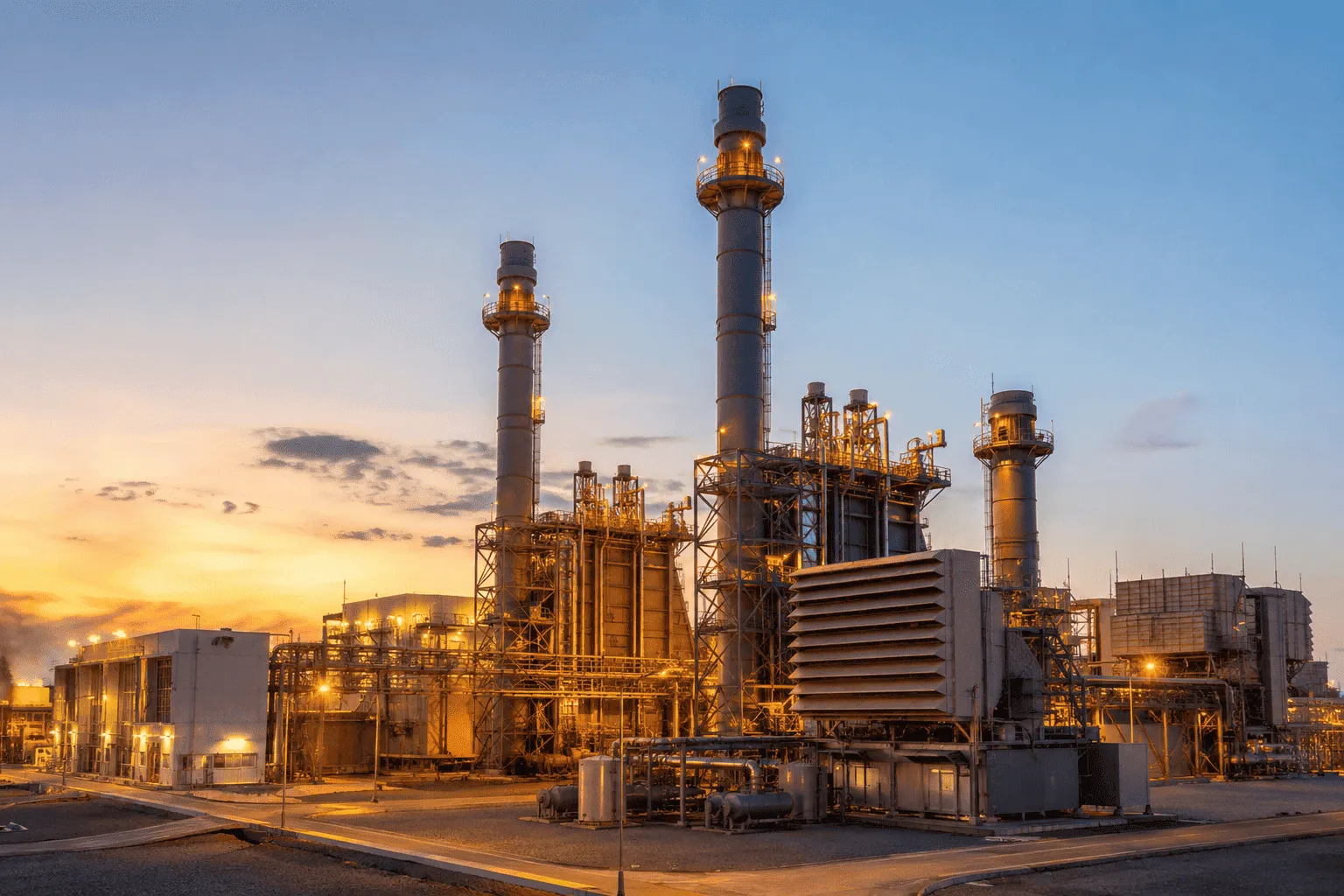
Ensuring stable power supply and improving energy efficiency are among the most critical concerns for large-scale industrial projects. In recent years, combined cycle power plants have become one of the most widely adopted solutions for large-scale electricity generation due to their higher efficiency and better fuel utilization.
These plants combine two power generation technologies, allowing them to produce more electricity from the same amount of fuel, which significantly reduces overall energy production costs.
How Does a Combined Cycle Power Plant Work?
In a combined cycle power plant, a gas turbine is first used to generate electricity. Unlike conventional power plants, the waste heat from the gas turbine is not discarded. Instead, it is directed into a heat recovery steam generator (HRSG), where it is used to produce steam.
This steam then drives a steam turbine, generating additional electricity. As a result, the energy contained in the fuel is utilized much more efficiently.
In simple terms, a combined cycle system consists of two main sections:
- Gas turbine
- Steam turbine
This combination significantly increases the overall efficiency of the power plant.
Why Is Efficiency Important in Combined Cycle Power Plants?
In industrial projects, energy cost represents a major portion of operational expenses. The higher the efficiency of a power plant, the more electricity is generated from the same amount of fuel, resulting in lower production costs.
For this reason, many industries and energy investors consider efficiency one of the most important decision-making factors when selecting a power generation solution.
Higher efficiency leads to:
- Reduced fuel consumption
- Lower electricity generation costs
- Reduced emissions
- Better utilization of energy resources
Main Components of a Combined Cycle Power Plant
The performance of this system depends on the coordination of several key components, each playing a specific role in the energy generation process.
The main components include:
- Gas turbine
- Heat Recovery Steam Generator (HRSG)
- Steam turbine
- Generator
- Control and monitoring systems
- Auxiliary power transmission and distribution equipment
The proper operation of each component directly affects the overall efficiency and stability of the plant.
Why Do Industries Prefer Combined Cycle Power Plants?
Many large industries require stable and reliable electricity supply. Power interruptions or fluctuations can lead to production downtime, increased operational costs, and reduced efficiency.
Combined cycle power plants are widely used in sectors such as:
- Oil and gas industry
- Petrochemical plants
- Steel and metal production
- Mining operations
- Industrial zones
- Large infrastructure projects
In these sectors, power reliability is just as important as cost efficiency.
The Role of Control Systems in Power Plant Operation
Modern power plants cannot operate without advanced control systems. Due to the complexity and scale of equipment, monitoring and control play a critical role in ensuring stable operation.
Control systems are responsible for:
- Monitoring equipment performance
- Regulating operational parameters
- Detecting faults and abnormal conditions
- Enhancing system safety
Higher levels of automation result in more stable, predictable, and efficient plant operation.
Key Advantages of Combined Cycle Power Plants
The widespread adoption of combined cycle technology is not only due to higher efficiency but also due to a combination of operational and economic benefits.
Key advantages include:
- Higher efficiency compared to conventional power plants
- Lower fuel consumption
- Reduced electricity generation costs
- Lower environmental emissions
- Suitability for large-scale industrial applications
- Stable and reliable power output
These advantages have made combined cycle systems a standard solution in modern power generation projects.
Factors That Influence Project Success
The success of a combined cycle power project depends on more than just selecting the right technology. Proper design, equipment selection, and operational strategy all play a crucial role.
Key evaluation factors include:
- Required capacity
- Fuel availability
- Selection of core equipment
- Expected efficiency levels
- Control and automation systems
- Operational and maintenance costs
A balanced approach to these factors can significantly improve long-term plant performance.
Why Combined Cycle Power Plants Remain a Leading Solution
Despite the development of alternative energy technologies, combined cycle power plants remain one of the most widely used solutions for large-scale electricity generation. This is due to their strong balance of efficiency, reliability, and economic feasibility.
For many industrial and infrastructure projects, they continue to provide a practical and proven solution for stable energy supply and optimized operational costs.
Frequently Asked Questions
What is a combined cycle power plant?
It is a power plant that combines gas and steam turbine technologies to generate electricity more efficiently.
What is the main advantage of a combined cycle power plant?
Higher efficiency and better utilization of fuel energy.
Why do industries use combined cycle power plants?
Because they provide stable electricity supply, high efficiency, and lower energy costs.
What is the role of an HRSG?
It captures waste heat from the gas turbine and uses it to generate steam.
Are control systems important in power plants?
Yes, they are essential for monitoring, controlling operations, and ensuring system safety.