
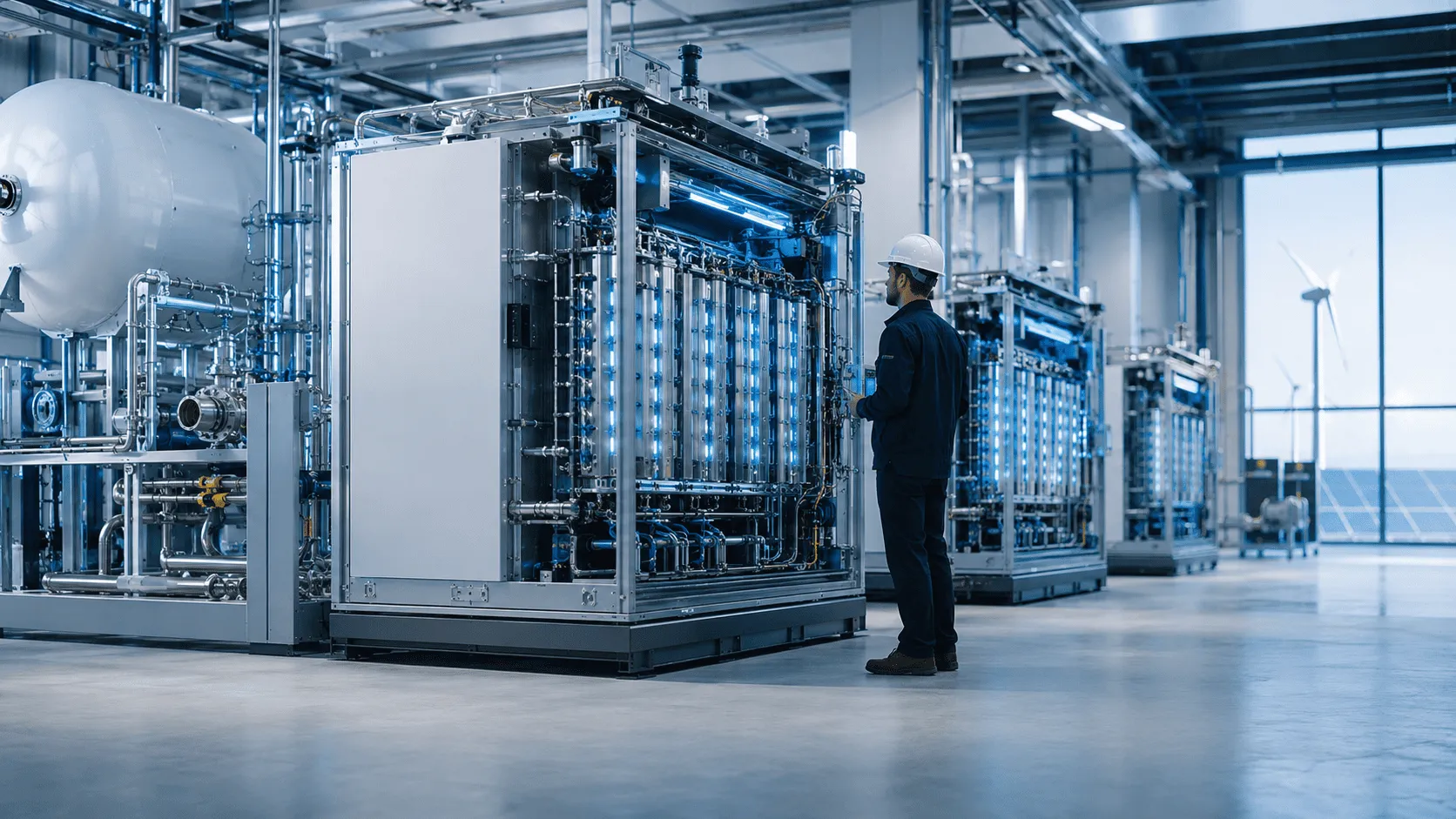
Fuel cell technology has emerged as one of the most promising solutions for cleaner and more efficient energy production. Unlike conventional power generation systems that rely on combustion, fuel cells generate electricity through electrochemical reactions, resulting in lower emissions and improved energy efficiency.
As industries and governments continue to pursue decarbonization strategies, fuel cells are increasingly being considered an important part of the future energy landscape.
How Does a Fuel Cell Work?
A fuel cell generates electricity by combining a fuel source, typically hydrogen, with oxygen. This process occurs through an electrochemical reaction rather than combustion.
The basic process includes:
- Supplying hydrogen to the fuel cell
- Introducing oxygen from the air
- Generating electricity through an electrochemical reaction
- Producing water and heat as by-products
Because no combustion takes place, fuel cells can achieve high efficiency while minimizing environmental impact.
Why Are Fuel Cells Important in the Energy Sector?
Growing energy demand and increasing pressure to reduce carbon emissions have accelerated the search for cleaner energy technologies. Fuel cells offer a combination of efficiency, reliability, and low emissions that make them attractive for a variety of energy applications.
Key advantages include:
- Low-emission electricity generation
- Higher efficiency than some conventional thermal systems
- Flexible deployment across different scales
- Reliable operation for industrial applications
These characteristics have positioned fuel cells as an important technology in the transition toward cleaner energy systems.
Industrial Applications of Fuel Cells
Fuel cells are no longer limited to research and development projects. Today, they are being deployed in a range of industrial and commercial applications.
Common applications include:
- On-site industrial power generation
- Energy supply for remote locations
- Backup power systems
- Transportation and mobility solutions
- Clean energy infrastructure projects
Their scalability allows them to be used in both small and large energy systems.
Types of Fuel Cells
Fuel cells are classified according to the type of electrolyte and operating technology they use. Each type is designed for specific applications and operating conditions.
Common fuel cell technologies include:
- Proton Exchange Membrane Fuel Cells (PEMFC)
- Solid Oxide Fuel Cells (SOFC)
- Molten Carbonate Fuel Cells (MCFC)
- Phosphoric Acid Fuel Cells (PAFC)
Each technology offers different advantages in terms of efficiency, operating temperature, and application suitability.
Advantages of Fuel Cells Compared to Conventional Power Systems
Fuel cells provide several benefits that distinguish them from traditional electricity generation technologies.
Major advantages include:
- High energy conversion efficiency
- Reduced environmental emissions
- Quiet operation
- Modular and scalable design
- Flexible deployment options
These benefits have made fuel cells increasingly attractive for modern energy projects.
Challenges Facing Fuel Cell Adoption
Despite their advantages, fuel cells still face several challenges that affect large-scale adoption.
Key challenges include:
- High initial investment costs
- Hydrogen production and distribution infrastructure requirements
- Technical complexity
- Economic limitations in certain applications
Addressing these challenges is an important step toward broader commercialization of fuel cell technologies.
The Future Role of Fuel Cells in Clean Energy
As global energy systems move toward lower carbon emissions, fuel cells are expected to play an increasingly important role. They can complement renewable energy sources such as solar and wind by providing reliable and flexible power generation.
Future applications are likely to expand in areas such as:
- Hybrid energy systems
- Low-carbon industrial projects
- Sustainable energy infrastructure
- Distributed power generation
These developments position fuel cells as a valuable component of future energy strategies.
Why Fuel Cells Are Gaining Attention in Modern Energy Projects
Fuel cells offer a unique combination of efficiency, low emissions, and operational flexibility. While they are not expected to replace all conventional power generation technologies in the near future, they can play an important role alongside renewable and traditional energy sources.
For industries seeking cleaner and more efficient energy solutions, fuel cells represent a technology with significant long-term potential.
Frequently Asked Questions
What is a fuel cell?
A fuel cell is a technology that generates electricity through an electrochemical reaction, typically using hydrogen and oxygen.
What is the main advantage of fuel cells?
They produce electricity with very low emissions while offering high energy efficiency.
Where are fuel cells used?
They are used in industrial power generation, backup power systems, transportation, remote facilities, and clean energy projects.
What fuel is commonly used in fuel cells?
Hydrogen is the most common fuel, although some fuel cell technologies can operate with other fuel sources.
Will fuel cells replace conventional power plants?
Currently, fuel cells are more commonly used as complementary energy solutions rather than complete replacements for large-scale power plants.