
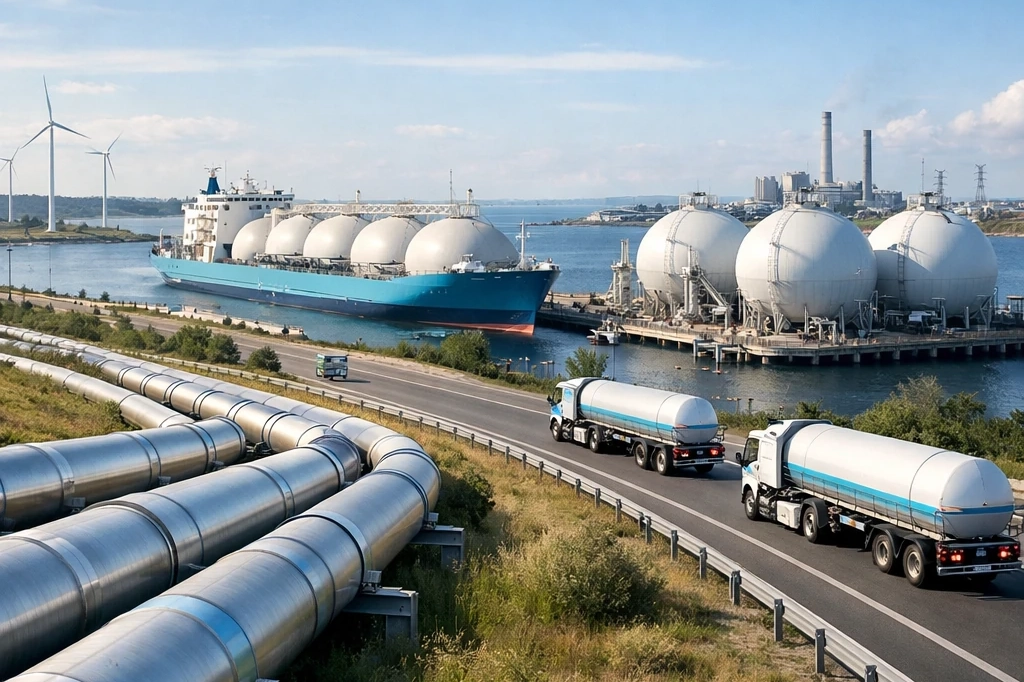
Hydrogen pipelines
Hydrogen can be transported through pipelines, as a liquid fuel, or via hydrogen carriers. Pipelines are the most efficient method for large-scale, continuous supply.
Hydrogen pipelines are similar to natural gas pipelines but require specific materials and engineering due to hydrogen’s small molecular size and risk of embrittlement.
Key points:
- Suitable for long-term, high-volume transport
- High initial infrastructure cost
- Requires dedicated or modified pipeline systems
Shipping hydrogen as liquid fuel
Hydrogen can be liquefied and transported by ships.
Process:
- Hydrogen is cooled to -253°C
- Stored in cryogenic tanks
- Transported via specialized vessels
This method is used for international hydrogen trade, similar to LNG shipping.
Challenges include high energy consumption and complex storage requirements.
Transporting hydrogen carriers
Hydrogen can also be transported using chemical carriers.
Common carriers:
- Ammonia (NH₃)
- Liquid Organic Hydrogen Carriers (LOHCs)
Advantages:
- Easier storage and transport
- Can use existing infrastructure in some cases
Hydrogen is released from the carrier at the destination.
Costs of hydrogen transportation
Transport costs are a major factor in hydrogen economics.
Cost drivers include:
- Distance between production and consumption
- Transport method (pipeline, shipping, carriers)
- Energy required for compression or liquefaction
- Infrastructure development costs
Reducing transport costs is key to making hydrogen competitive.
Future hydrogen transport systems
Future developments in hydrogen transport include:
- Expansion of hydrogen pipeline networks
- Global hydrogen shipping routes
- Improved carrier technologies
- Integration with renewable energy hubs
These systems will enable large-scale hydrogen trade between regions.
FAQ
How is hydrogen transported long distances?
Through pipelines, liquid hydrogen shipping, or hydrogen carriers like ammonia.
Can hydrogen be shipped internationally?
Yes, mainly as liquid hydrogen or through chemical carriers.
What are hydrogen carriers?
Substances like ammonia or LOHCs that store and transport hydrogen more efficiently.
Final Insight
Hydrogen transport is one of the most critical components of the hydrogen value chain. Without efficient transport systems, hydrogen cannot become a globally traded energy commodity.
Management Perspective
“Transport defines scale. Hydrogen becomes a global energy commodity only when we can move it efficiently across regions and markets.”
— Dr. Roshandel