
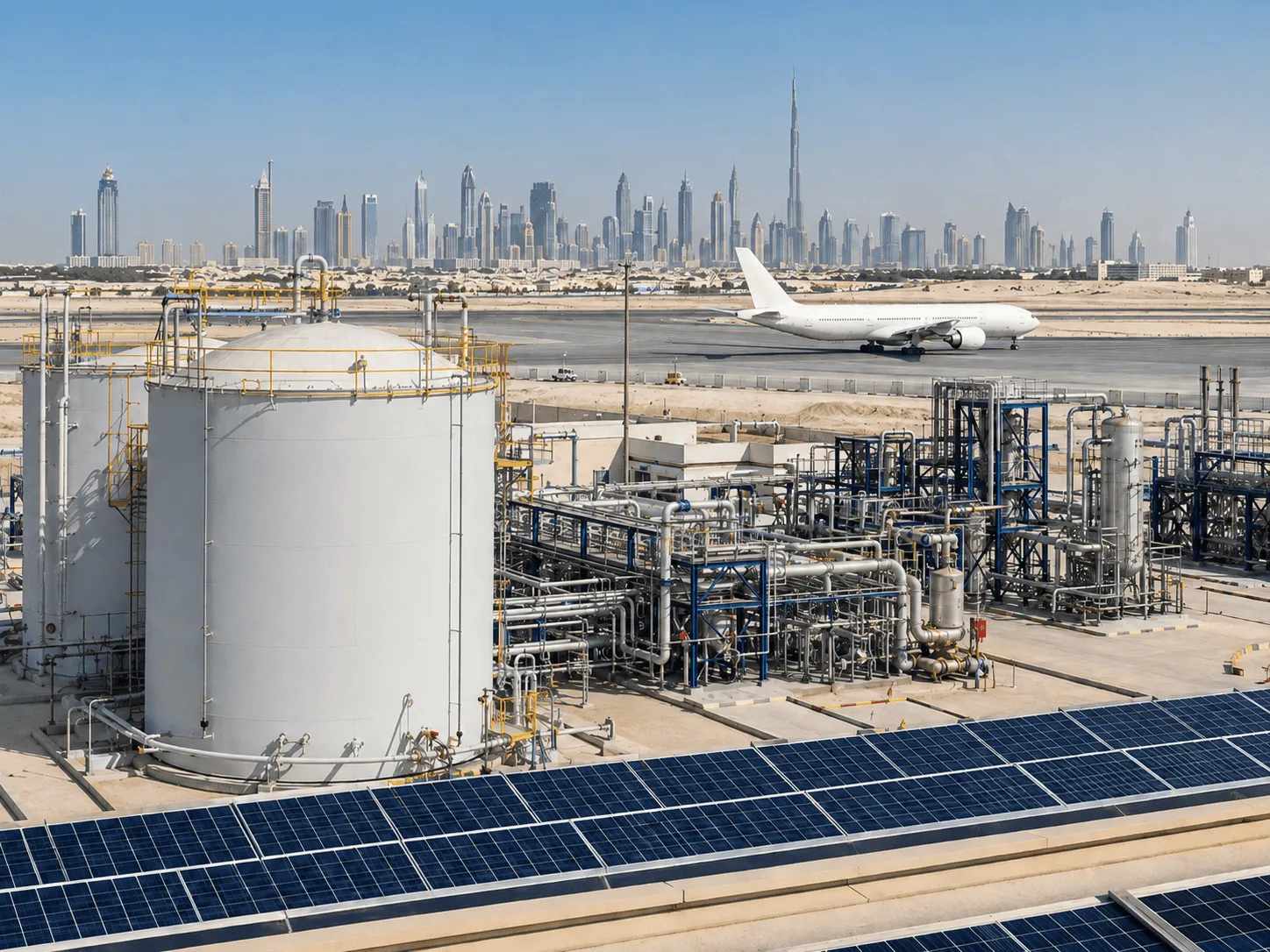
Liquefied natural gas, or LNG, allows natural gas to be transported between markets that are not connected by pipeline.
Natural gas is cooled to around -162°C until it becomes liquid. In this form, its volume is about 600 times smaller, making long-distance storage and marine transport more practical.
However, LNG delivery depends on more than a liquefaction plant and a carrier. Every stage, from gas processing to final distribution, must be coordinated through one reliable supply chain.
At Syntelli, LNG is a core part of our Environmental Energy Group. Our activities cover project development, delivery operations, marketing, shipping and the optimization of LNG sales across international markets.
What Is the LNG Supply Chain?
The LNG supply chain connects natural gas production with customers in another country or region.
Its main stages are:
- Natural gas production
- Gas processing
- Liquefaction
- LNG storage and loading
- Marine transportation
- Import terminal storage
- Regasification
- Delivery to the final customer
Each stage affects cost, safety, delivery reliability and the environmental performance of the final cargo.
LNG Supply Chain at a Glance
| Stage | Main purpose |
| Gas production | Extract natural gas from the field |
| Processing | Remove water, CO₂ and other impurities |
| Liquefaction | Cool the gas until it becomes LNG |
| Export storage | Hold LNG before loading |
| Shipping | Transport LNG to the destination market |
| Import storage | Receive and store the cargo |
| Regasification | Convert LNG back into gas |
| Distribution | Deliver gas to power plants, industries or networks |
The same chain can include both onshore and floating facilities depending on the project location and market requirements.
1. Natural Gas Production and Processing
The LNG process begins with natural gas produced from an upstream field.
Raw gas cannot usually be sent directly to a liquefaction plant. It may contain:
- Water
- Carbon dioxide
- Hydrogen sulphide
- Heavy hydrocarbons
- Mercury
- Other contaminants
These components must be removed because they can freeze, damage equipment or affect the quality of the LNG.
The processing stage also ensures that the feed gas meets the technical requirements of the liquefaction plant.
2. Liquefaction
Liquefaction is the stage where treated natural gas is cooled to approximately -162°C.
Large LNG facilities often use several parallel production units known as liquefaction trains. Each train cools and processes part of the total gas supply.
The design of a liquefaction project depends on:
- Available gas volume
- Gas composition
- Required production capacity
- Energy efficiency
- Climate conditions
- Technology selection
- Planned operating life
Liquefaction is one of the most energy-intensive parts of the LNG chain. Plant efficiency and equipment availability therefore have a direct effect on production cost and emissions.
3. LNG Storage and Loading
After liquefaction, LNG is transferred into insulated storage tanks at the export terminal.
These tanks keep the fuel at a very low temperature until a carrier is ready for loading.
A small amount of LNG naturally evaporates inside the tank. This is known as boil-off gas.
Boil-off gas can be:
- Returned to the liquefaction process
- Used as fuel
- Recompressed
- Managed through another recovery system
When a carrier arrives, LNG is transferred through cryogenic loading arms or hoses. Emergency shutdown and safe-disconnection systems are used to control the loading process.
4. LNG Shipping
LNG is transported in specialized carriers with insulated tanks designed for cryogenic cargo.
Shipping plans must consider:
- Distance between terminals
- Vessel availability
- Port access
- Canal and maritime routes
- Weather conditions
- Fuel consumption
- Loading and unloading schedules
- Boil-off gas management
A delay at one terminal can affect the entire delivery schedule. Shipping must therefore be coordinated with production, tank capacity and receiving-terminal availability.
Some LNG is sold with the seller responsible for delivery to the destination. In other contracts, the buyer arranges the vessel and takes responsibility after loading.
This commercial structure affects shipping risk, cost and operational control.
5. Receiving and Storing LNG
At the destination terminal, the LNG is unloaded into insulated storage tanks.
The receiving facility must have enough capacity to accept the cargo without disrupting other deliveries.
Terminal operators manage:
- Vessel scheduling
- Unloading
- LNG storage
- Boil-off gas
- Fuel quality
- Metering
- Safety systems
Some markets use floating storage and regasification units, known as FSRUs, instead of permanent onshore terminals.
An FSRU can receive LNG, store it and convert it back into gas before delivering it to an onshore pipeline or customer.
6. Regasification
Before LNG can enter a conventional gas network, it must be returned to its gaseous state.
This process is called regasification.
LNG passes through vaporizers where it is heated using seawater, air, heated water or another energy source.
The resulting gas is then:
- Measured
- Pressure-controlled
- Checked for quality
- Prepared for pipeline delivery
The regasification capacity must match both cargo arrivals and customer demand. A terminal may have sufficient storage but still face limitations if its vaporizers cannot deliver gas at the required rate.
7. Final Delivery
After regasification, natural gas can be supplied to:
- Power plants
- Industrial facilities
- Gas distribution networks
- Petrochemical plants
- Fertilizer producers
- Large commercial customers
In areas without pipeline access, LNG can also be distributed in smaller quantities by truck, rail, barge or specialized containers.
These systems are sometimes called virtual pipelines because they deliver gas without a permanent transmission pipeline.
Long-Term Contracts and Spot LNG
LNG is traded through both long-term agreements and short-term or spot transactions.
Long-Term LNG Contracts
Long-term contracts can provide:
- Predictable supply volumes
- More stable revenue
- Support for project financing
- Defined delivery schedules
- Clear buyer and seller obligations
They are especially important for capital-intensive liquefaction projects.
Spot and Short-Term Trading
Spot transactions allow buyers and sellers to respond to:
- Seasonal demand
- Unexpected shortages
- Price changes
- Maintenance outages
- Available production capacity
A balanced LNG portfolio may combine long-term contracts with flexible trading.
What Affects LNG Delivery Reliability?
A reliable supply chain depends on every stage working together.
Important factors include:
- Stable upstream gas supply
- Liquefaction plant availability
- Sufficient storage capacity
- Access to LNG carriers
- Port and shipping-route availability
- Receiving-terminal capacity
- Regasification performance
- Pipeline access
- Clear commercial responsibilities
A problem in one section can delay or reduce delivery across the full chain.
For example, a liquefaction plant may continue producing, but cargoes cannot be loaded if export tanks are full and no vessel is available.
What Determines LNG Supply Cost?
The delivered cost of LNG includes more than the natural gas itself.
Main cost components include:
- Upstream gas production
- Gas processing
- Pipeline transport to the export terminal
- Liquefaction
- Storage and loading
- Marine shipping
- Import-terminal charges
- Regasification
- Final pipeline or local delivery
Shipping distance, fuel prices, charter rates and terminal availability can significantly affect the final cost.
This is why buyers should compare the complete delivered price rather than only the price at the liquefaction terminal.
Reducing Emissions Across the LNG Chain
LNG emissions are produced across upstream operations, gas processing, liquefaction, shipping and regasification.
Key reduction measures include:
- Detecting and repairing methane leaks
- Reducing routine flaring
- Improving plant efficiency
- Using lower-emission electricity
- Recovering boil-off gas
- Improving vessel efficiency
- Applying CCUS to suitable emission streams
The emissions profile can vary significantly between different projects, even when the final fuel is technically similar.
Reliable measurement is therefore important when comparing LNG sources or setting carbon-reduction targets.
How to Evaluate an LNG Supply Opportunity
Before entering an LNG project or supply agreement, companies should review the complete chain.
1. Confirm the Gas Source
Assess reserves, production reliability, gas quality and pipeline access.
2. Review Liquefaction Capacity
Confirm available capacity, production schedule and maintenance requirements.
3. Define the Commercial Structure
Determine the contract duration, pricing method, delivery terms and volume flexibility.
4. Plan Shipping
Review vessel availability, route length, port restrictions and delivery windows.
5. Confirm Receiving Capacity
Check storage, unloading and regasification capacity at the destination.
6. Assess Customer Demand
Understand the required volume, seasonal profile and pipeline-delivery conditions.
7. Review Supply Risks
Consider operational failures, shipping delays, market volatility and infrastructure constraints.
This approach prevents decisions from being based on only one part of the value chain.
Common LNG Supply Chain Mistakes
Common problems include:
- Securing LNG without confirmed terminal capacity
- Ignoring shipping and charter costs
- Underestimating boil-off gas
- Failing to match cargo size with tank capacity
- Depending on one vessel or route
- Choosing contract terms without understanding delivery responsibility
- Evaluating price without including regasification and final delivery
- Ignoring emissions across the full chain
A successful LNG transaction requires coordination between producers, terminal operators, traders, vessel owners and buyers.
LNG Value Chain Development at Syntelli
At Syntelli, our LNG activities cover multiple parts of the international value chain.
Our LNG Asia-Pacific Division focuses on natural gas and LNG operations, project development and delivery management. Our LNG Americas & New Ventures Division works across project development, operations, gas marketing, shipping, chartering and LNG sales optimization.
This integrated view allows LNG opportunities to be assessed from production and infrastructure through to trading and final delivery.
Discuss an LNG Supply or Project Opportunity
A reliable LNG project requires a clear gas source, liquefaction route, shipping plan, receiving terminal and final customer.
Contact Syntelli to discuss LNG project development, supply, shipping, marketing or delivery requirements across international markets.
Frequently Asked Questions
Why is natural gas converted into LNG?
Liquefaction reduces its volume by about 600 times, making long-distance storage and marine transport more practical.
Is LNG transported only by ship?
No. Large international cargoes usually move by carrier, but smaller volumes can also be transported by truck, rail, barge or specialized containers.
What is regasification?
Regasification is the process of heating LNG and converting it back into natural gas before pipeline delivery.
What is an FSRU?
An FSRU is a floating facility that receives, stores and regasifies LNG before sending the gas to shore or directly to a customer.
What is the difference between long-term and spot LNG?
Long-term contracts provide agreed volumes over several years. Spot transactions are arranged for individual cargoes or shorter periods.
What is the first step in an LNG supply project?
The first step is to confirm the gas source, destination market and available infrastructure across the full delivery chain.