
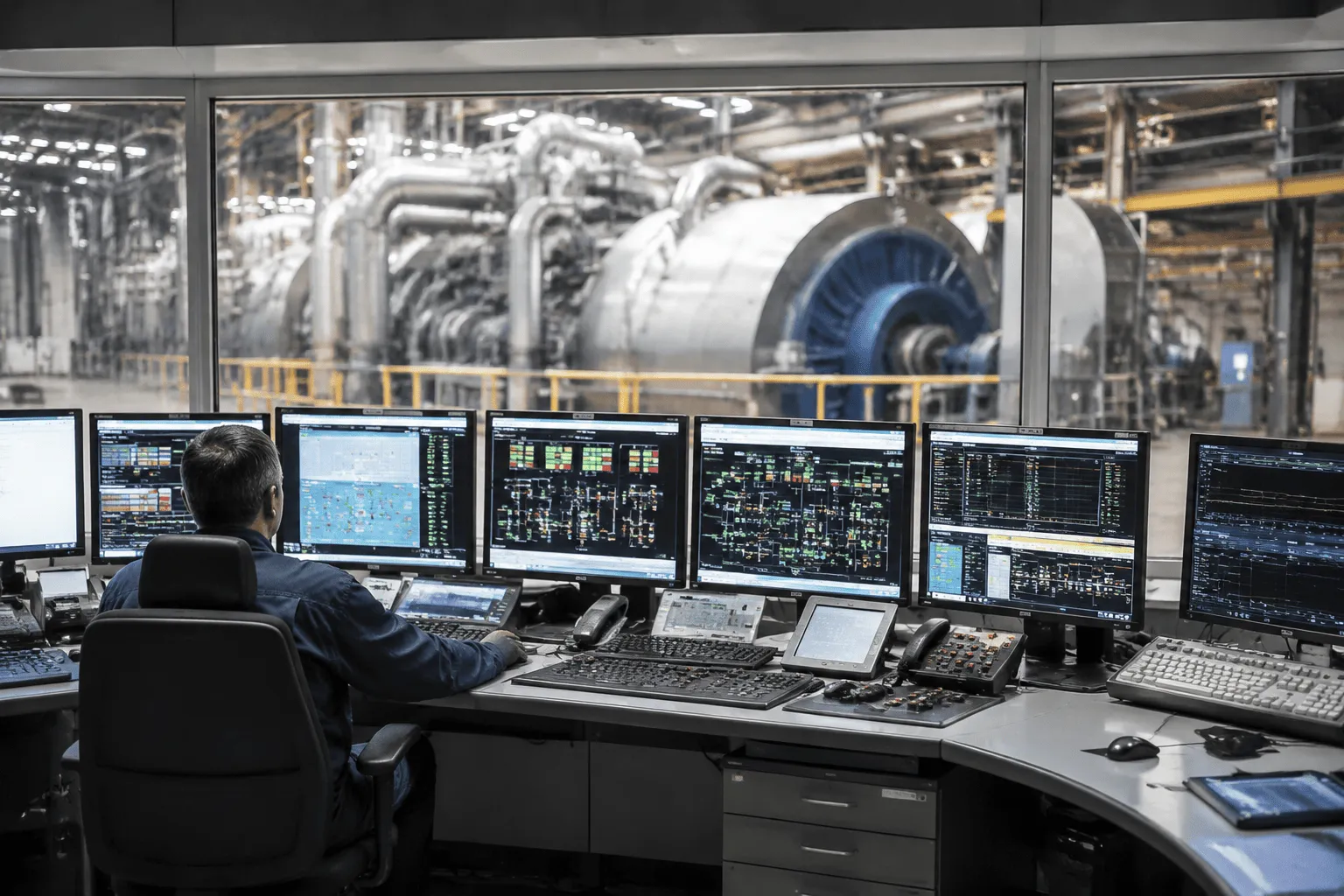
In modern power plants, maintaining reliable operation and ensuring equipment safety would be impossible without advanced control systems. The large volume of operational data, the complexity of power generation processes, and the need for continuous electricity production have made control systems a central part of every power plant.
These systems play a direct role in improving reliability, reducing operational risks, and supporting safe and efficient plant performance.
Why Are Control Systems Essential in Power Plants?
Power plants operate in highly complex environments where multiple systems and components must work together continuously. A failure in one area can affect the performance of the entire facility.
Control systems help operators:
- Monitor equipment in real time
- Detect potential issues quickly
- Maintain safe operating conditions
- Improve overall plant efficiency
Without effective control systems, stable and predictable plant operation would be difficult to achieve.
The Structure of a Power Plant Control System
A power plant control system typically consists of several interconnected layers, each responsible for specific operational functions.
These layers generally include:
- Field devices and sensors
- Controllers
- Monitoring systems
- Human Machine Interface (HMI)
Together, these components collect operational data, process information, and provide actionable insights to plant operators.
Managing Equipment Performance Through Control Systems
Control systems continuously monitor equipment conditions and automatically adjust operating parameters when necessary.
Typical functions include:
- Load regulation
- Temperature and pressure control
- Coordination between plant subsystems
- Process optimization under varying conditions
The objective is to keep equipment operating within optimal performance ranges while minimizing operational instability.
The Role of Control Systems in Plant Safety
Safety is one of the most important functions of any power plant control system. Abnormal operating conditions must be identified and addressed as quickly as possible to avoid equipment damage or operational incidents.
Control systems contribute to safety by:
- Detecting abnormal conditions
- Activating alarms and notifications
- Initiating emergency shutdown procedures when required
- Protecting critical equipment from damage
These capabilities help reduce operational risk and improve plant reliability.
How Controllers Support Plant Operations
Controllers serve as the processing core of the control system. They analyze data received from field devices and execute control logic to maintain desired operating conditions.
Key controller functions include:
- Real-time data processing
- Execution of control strategies
- Equipment coordination
- Rapid response to operational changes
Accurate controller performance is essential for maintaining stable power generation.
The Importance of Monitoring Systems
Monitoring systems provide operators with visibility into plant performance and equipment status, allowing informed operational decisions based on real-time information.
Monitoring capabilities typically include:
- Equipment status visualization
- Operational data recording
- Power generation tracking
- Performance and efficiency analysis
Without effective monitoring, managing complex power generation facilities becomes significantly more challenging.
How Control Systems Improve Power Plant Efficiency
One of the primary goals of a control system is to optimize overall plant performance. By continuously regulating equipment and minimizing operational inefficiencies, control systems help improve energy production and resource utilization.
Common benefits include:
- Reduced fuel consumption
- More stable power generation
- Lower unplanned downtime
- Improved equipment lifespan
These improvements contribute directly to lower operating costs and higher plant productivity.
Challenges of Implementing Power Plant Control Systems
Although control systems offer substantial benefits, implementation and maintenance can present certain challenges.
Common challenges include:
- Complex system design requirements
- Need for specialized expertise
- Initial investment costs
- Integration between multiple technologies and equipment
Despite these challenges, control systems remain a fundamental requirement for modern power generation facilities.
The Future of Power Plant Control Systems
Control technologies continue to evolve as power plants adopt more advanced digital solutions. Modern systems increasingly use intelligent automation, advanced analytics, and real-time monitoring to improve decision-making and operational efficiency.
As power generation becomes more data-driven, control systems will play an even greater role in enhancing reliability, safety, and energy management.
Frequently Asked Questions
What is a power plant control system?
It is a system designed to monitor, manage, and control power plant operations automatically and in real time.
What is the primary function of a control system?
To maintain operational stability, improve safety, and optimize power generation performance.
What do controllers do in a power plant?
They process operational data and issue commands that regulate equipment performance.
How do control systems improve safety?
By detecting abnormal conditions, activating alarms, and initiating protective actions when necessary.
Do control systems affect power plant efficiency?
Yes. They help reduce fuel consumption, minimize operational errors, and improve overall plant performance.