
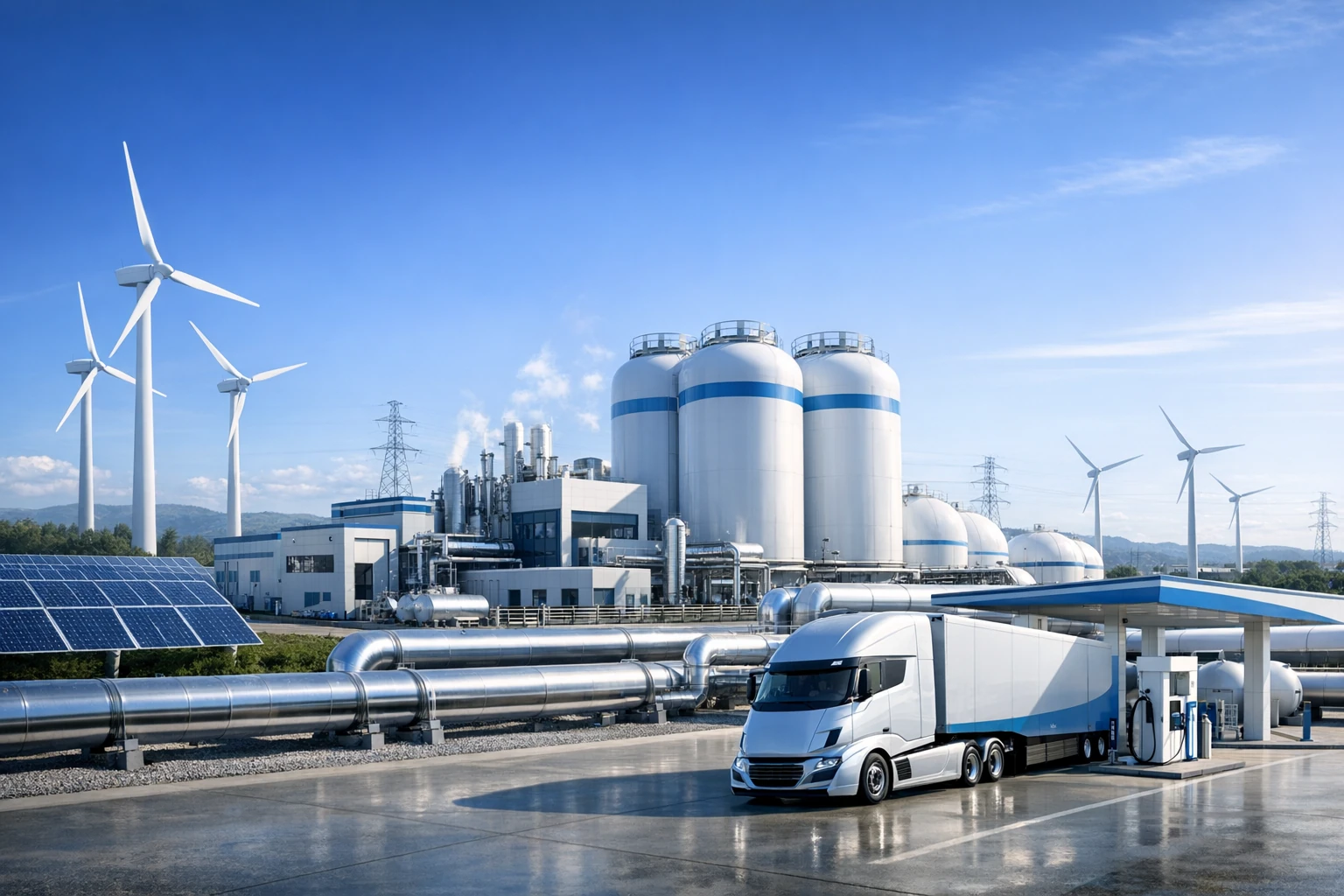
What the hydrogen economy means
The hydrogen economy refers to a future energy system where hydrogen is widely used to store, transport, and deliver energy across industries, replacing or complementing fossil fuels.
In this model, hydrogen acts as a bridge between renewable energy production and industrial energy demand. It allows energy to be stored, transported, and used in sectors where direct electrification is not feasible.
Why countries are investing in hydrogen
Governments around the world are investing heavily in hydrogen for several strategic reasons:
- Reducing carbon emissions
- Achieving net-zero targets
- Strengthening energy security
- Diversifying energy sources
- Creating new industrial opportunities
Hydrogen is seen as a long-term solution for building resilient and low-carbon energy systems.
Industries that will use hydrogen
Hydrogen is expected to play a major role in several industries:
- Steel production → replacing coal in manufacturing
- Transportation → especially heavy-duty vehicles and shipping
- Power generation → balancing renewable energy
- Chemicals → ammonia and fertilizers
- Oil & gas → refining and hydrogen blending
These sectors are difficult to electrify, making hydrogen a critical alternative.
Challenges of building a hydrogen economy
Despite strong interest, building a hydrogen economy faces major challenges:
- High production costs
- Lack of infrastructure
- Storage and transport complexity
- Efficiency losses
- Regulatory and policy gaps
Scaling hydrogen requires coordinated investment across the entire value chain.
Future outlook for hydrogen energy
The future of hydrogen depends on technological progress and global investment.
Key trends include:
- Rapid growth of green hydrogen projects
- Expansion of hydrogen infrastructure
- Falling costs due to scale
- Integration with renewable energy systems
Hydrogen is expected to become a core component of global energy markets over the next decades.
FAQ
What is the hydrogen economy?
It is an energy system where hydrogen is used as a major carrier of energy across industries.
Which countries lead hydrogen development?
Countries like Germany, Japan, South Korea, UAE, and Australia are leading hydrogen investments.
Can hydrogen replace fossil fuels?
Hydrogen can replace fossil fuels in many sectors, but full replacement will take time and infrastructure development.
Final Insight
The hydrogen economy is not a single technology shift—it is a systemic transformation of how energy is produced, stored, and consumed. Its success depends on the integration of infrastructure, investment, and industrial demand.
Management Perspective
“The hydrogen economy is not built on technology alone—it is built on infrastructure, investment, and long-term vision. Those who move early will define the market.”
— Dr. Roshandel