
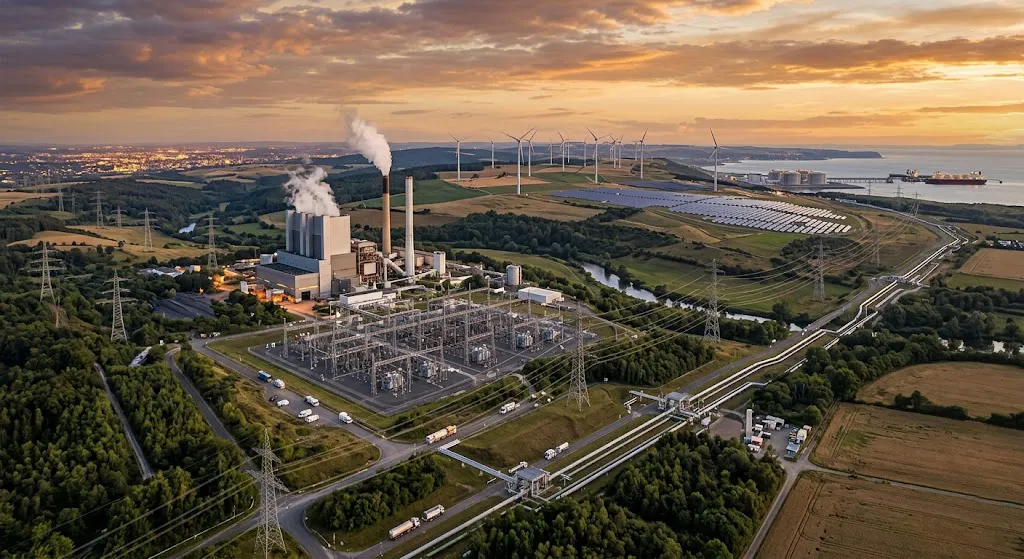
What energy infrastructure means
Energy infrastructure refers to the physical systems and assets used to produce, transport, store, and distribute energy. These systems form the backbone of modern economies and enable industries, cities, and households to function without disruption.
Energy infrastructure includes power plants, transmission networks, pipelines, storage systems, and distribution grids. It connects energy sources to end users efficiently and reliably.
Main types of energy infrastructure
Generation infrastructure
Facilities that produce energy:
- Power plants (gas, coal, nuclear)
- Renewable sources (solar, wind, hydro)
Transmission infrastructure
Systems that move energy across long distances:
- High-voltage power lines
- Oil and gas pipelines
- LNG transport systems
Distribution infrastructure
Final delivery systems:
- Local electricity grids
- Gas networks
- Fuel distribution systems
Storage infrastructure
Systems that ensure reliability:
- Battery storage
- Gas storage
- Strategic oil reserves
Why energy infrastructure is important for modern economies
Supports industrial growth
Industries rely on stable and continuous energy supply.
Enables urban development
Cities need uninterrupted electricity, heating, and fuel systems.
Drives economic growth
Strong infrastructure attracts investment and boosts GDP.
Ensures energy security
Reduces dependency and minimizes supply disruptions.
Challenges in building energy infrastructure
High investment costs
Projects require large capital and long-term financing.
Regulatory and environmental barriers
Strict compliance is required for approvals.
Technical complexity
Projects involve engineering, procurement, and construction coordination.
Long timelines
Projects often take years from planning to operation.
Market uncertainty
Energy prices and demand fluctuations affect feasibility.
The future of global energy infrastructure
Growth of renewable energy
Solar and wind investments are increasing globally.
Smart infrastructure
Digital monitoring and automation improve efficiency.
Decentralization
Energy systems are becoming more distributed.
Integration of storage
Battery systems support renewable stability.
Sustainability focus
Low-carbon infrastructure is becoming the standard.
Best energy infrastructure companies in the world
Leading companies in this sector combine engineering expertise, financial strength, and global execution capability.
The best energy infrastructure companies typically operate across multiple sectors and deliver large-scale projects with high efficiency and reliability.
International energy infrastructure companies
International players are critical in large-scale development.
They provide:
- Cross-border expertise
- Access to global capital
- Advanced technical standards
- EPC execution capability
Energy projects under Dr Roshandel management
Projects under Dr Roshandel management focus on structured execution, international expansion, and scalable infrastructure development.
Key characteristics:
- Strong governance
- Controlled risk management
- Strategic partnerships
- Focus on long-term value
FAQ
What is energy infrastructure?
It includes all systems used to produce, transport, store, and deliver energy.
Why is energy infrastructure important for economic growth?
It enables industrial activity, supports cities, and attracts investment.
What are examples of energy infrastructure?
Power plants, pipelines, transmission lines, storage systems, and distribution networks.
About Syntelli
Syntelli focuses on developing and managing energy infrastructure projects aligned with modern industry demands. In the context of energy infrastructure, the company emphasizes efficient system design, integration of advanced technologies, and execution of scalable projects. By aligning engineering, investment, and operational strategies, Syntelli contributes to building reliable and future-ready energy systems across different markets.