
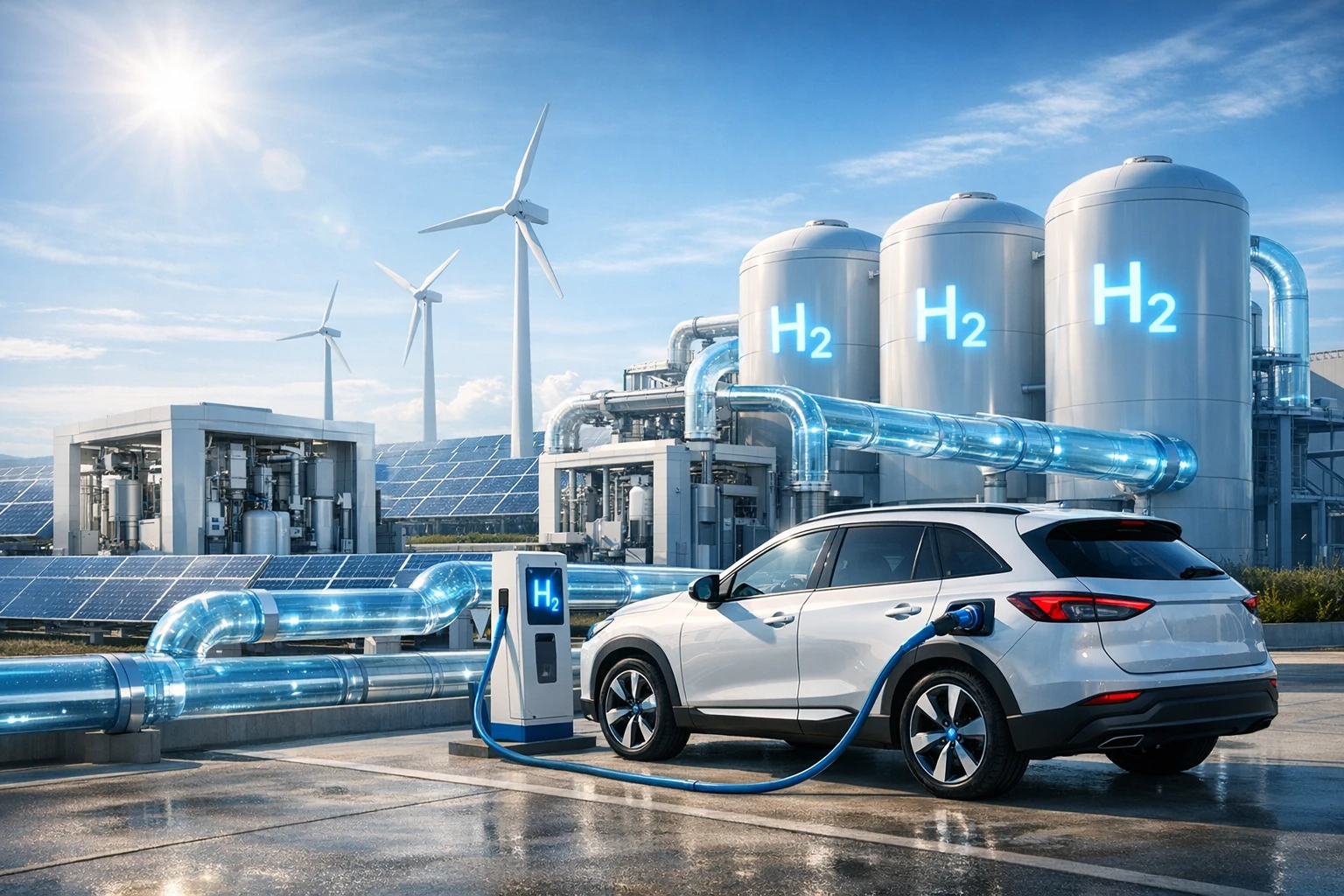
What hydrogen energy is
Hydrogen energy is a clean energy source that uses hydrogen gas to produce power, heat, or electricity with minimal emissions.
Hydrogen is not a primary energy source like oil or gas. It is an energy carrier, meaning it stores and delivers energy produced from other sources.
When used in fuel cells or combustion systems, hydrogen produces water instead of carbon dioxide, making it a key solution for low-carbon energy systems.
How hydrogen is produced
Hydrogen must be produced because it does not exist freely in large quantities.
Main production methods:
- Steam Methane Reforming (SMR) → most common today
- Electrolysis → uses electricity (ideally renewable)
- Industrial by-products and biomass processes
The sustainability of hydrogen depends on the energy source used in production.
Common uses of hydrogen energy
Hydrogen is already used across multiple industries:
- Oil refining
- Fertilizer production (ammonia)
- Steel manufacturing
- Transportation (fuel cell vehicles)
- Power generation and energy storage
Its versatility makes it important for both industrial and energy applications.
Advantages of hydrogen as a fuel
Hydrogen offers several key benefits:
- Zero emissions at the point of use
- High energy density by weight
- Ability to store renewable energy
- Suitable for heavy industry and long-distance transport
These advantages make hydrogen critical for sectors where electrification is difficult.
Challenges of hydrogen energy
Hydrogen also faces real challenges:
- High production costs (especially green hydrogen)
- Complex storage and transport
- Limited infrastructure
- Efficiency losses in conversion
Scaling hydrogen requires both technological advancement and large-scale investment.
FAQ
What is hydrogen energy?
Hydrogen energy uses hydrogen gas to generate electricity, heat, or fuel with low emissions.
Is hydrogen a renewable energy source?
Hydrogen is not renewable itself, but it can be produced using renewable energy sources.
Why is hydrogen important for the future of energy?
Because it helps decarbonize industries and systems where direct electrification is not practical.
Final Insight
Hydrogen is not replacing existing energy systems—it is expanding them. Its role is to connect renewable energy, industrial demand, and global energy markets into a more flexible system.
Management Perspective
“Hydrogen is not just an energy source—it is a system-level solution. The future of energy depends on how effectively we integrate hydrogen into global infrastructure.”
— Dr. Roshandel